SEO · Melbourne small business · 6 Oct 2026
How SEO Actually Works: The Chalkboard Explainer for Melbourne Businesses
06 October 2026
You want more Google traffic. You've heard about SEO. Maybe you've been pitched expensive packages or miracle page-one promises. Here's the truth: page two is where leads go to die, and spam tricks won't get you to page one. What actually works is simpler than the industry makes it sound.
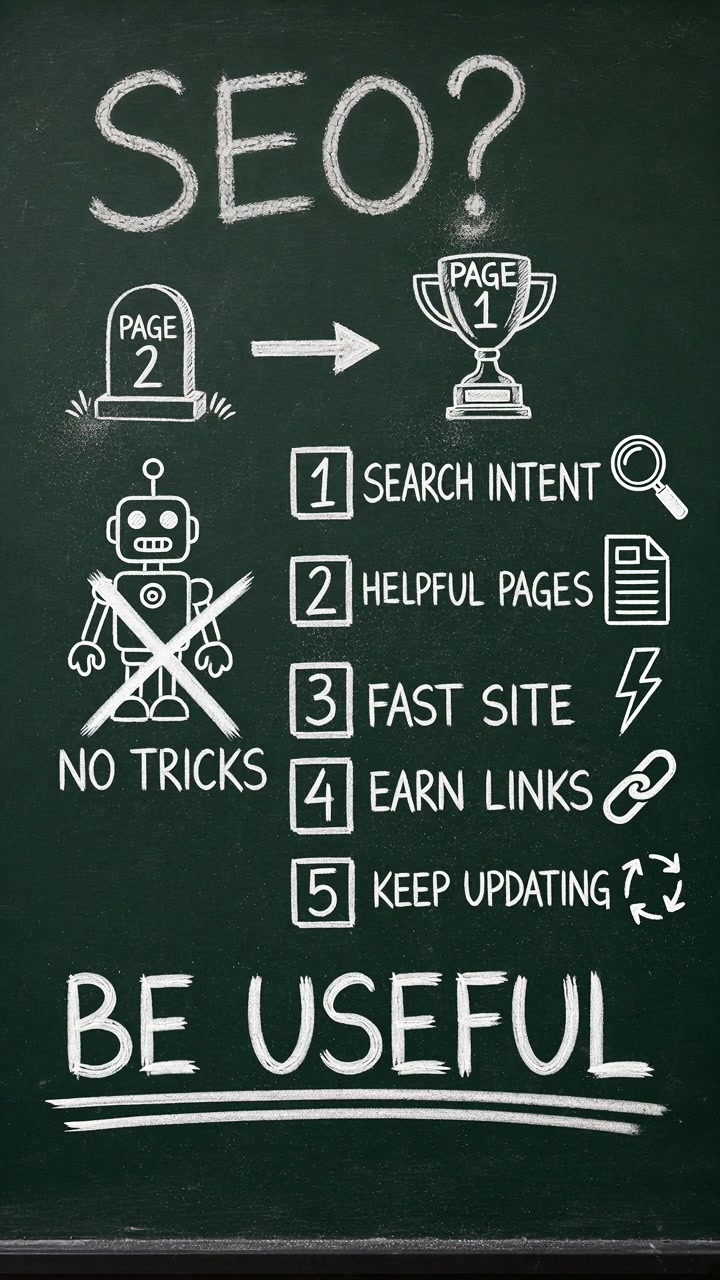
19-second chalkboard explainer on what actually works in SEO.
The reality: page two is the graveyard
If your business sits on page two of Google search results, you are invisible. The first page gets the clicks, the calls, and the customers. Page two is where leads go to die.
The agencies selling "SEO packages" know this. Some will promise page-one rankings using spam tricks — bought links, keyword stuffing, cloaked content, private blog networks. Google's algorithm catches most of these eventually. When it does, you can lose months of rankings overnight.
What actually works
Google's job is to match search intent with helpful results. Your job is to be the helpful result. Here's how:
1. Match search intent
Before you write a word, understand what your customer is actually trying to do. Someone searching "emergency plumber Fitzroy" wants a plumber now, not a 2,000-word history of Victorian plumbing. Someone searching "how to fix a leaking tap" wants instructions, not a sales pitch.
Match the intent, or Google will show your competitor instead.
2. Write helpful pages
Helpful means useful to the person searching. Answer their question. Solve their problem. Give them what they came for, clearly and without filler.
This is not about writing for Google. Google measures whether people find your page useful by watching what happens after they click: do they stay and read, or do they bounce back to search for a better answer? If your page answers the question, they stay. If it wastes their time, they leave, and your rankings drop.
3. Make the site fast on mobile
Most searches happen on phones. If your site takes five seconds to load or looks broken on a small screen, people leave before they see your content. Google sees that too.
Fast, mobile-friendly sites rank better because they work better. Compress images. Cut unnecessary scripts. Test on a real phone, not just a desktop browser's mobile preview.
4. Earn real links
When other websites link to your page, Google reads that as a vote of trust. A link from a local news site, an industry directory, or a supplier's resource page tells Google your site is legitimate and relevant.
Earn those links by being useful. Publish something worth linking to: a detailed how-to, local data, a well-researched buyer's guide. Reach out to local journalists, industry peers, or directory managers when you have something they would actually want to share.
Do not buy links from "SEO link vendors." Google can spot most of those, and when it does, you lose rankings, not gain them.
5. Keep updating
SEO is not a one-time project. Markets change. Competitors publish new content. Google's algorithm improves. A page that ranked well six months ago can slide if you let it go stale.
Set a schedule. Review your key pages quarterly. Update prices, add new sections, answer new questions your customers are asking. Fresh, current content ranks better because it's more useful to searchers right now.
The punchline: be useful
Every tactic above comes back to the same idea: be useful. Google's algorithm is sophisticated, but its goal is simple — show people the most helpful result for what they searched. If your page is that result, you rank. If it's not, someone else does.
This is good news for small businesses. You don't need to outspend your competitors on ads or hire an agency to game the system. You need to understand what your customers are searching for and give them a better answer than anyone else.
Video transcript
Okay, so you want more Google traffic? First thing — page two is where leads go to die. Spam tricks won't get you to page one. What actually works: match search intent, write helpful pages, make the site fast on mobile, earn real links, and keep updating. Do that consistently. Be useful.
When to get help
If you are a Melbourne cafe owner, a Fitzroy clinic, a Carlton retail shop, or a Brunswick tradie, you probably don't have time to audit search intent and track ranking changes every week. That's where we come in.
iWizz helps Melbourne small businesses get found on Google using the tactics above — no spam, no tricks, just the work that actually moves rankings. We write the helpful content, fix the mobile experience, build the real links, and keep your key pages current so you can focus on running your business.